Her Crew
The Men Who Served
USS Laffey (DD-724) was only as strong as the men who sailed her. This is their story.
336 Men. One Ship. One Mission.
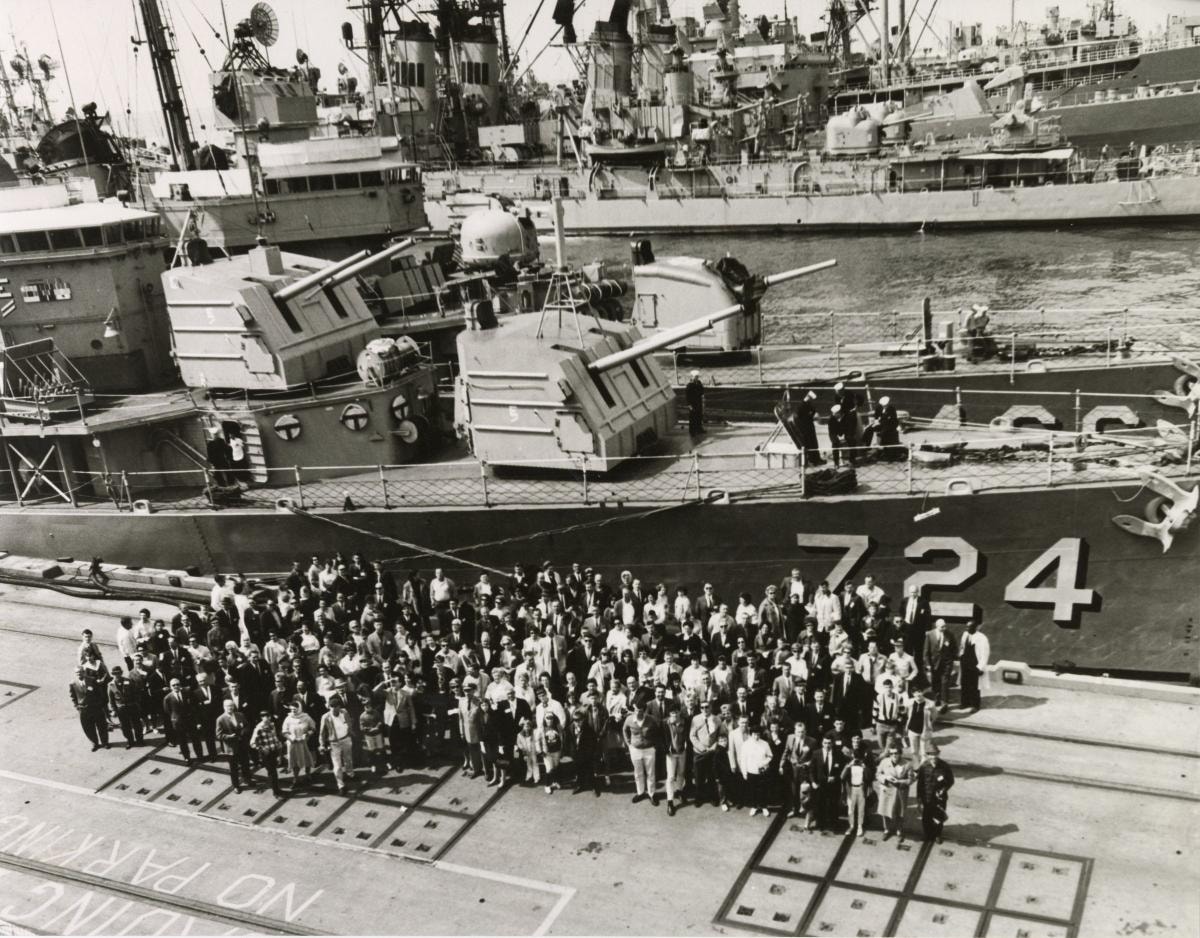
When USS Laffey (DD-724) steamed into the waters off Okinawa on April 16, 1945, she carried a crew of 336 officers and enlisted men. They were young — most in their late teens and early twenties — drawn from every corner of America. Farmers, factory workers, students, and sons. They had trained together, sailed together, and on that April morning, they fought together with a ferocity that defied every expectation.
Their commanding officer was Lieutenant Commander Julian Becton, a Naval Academy graduate who had already seen combat in the Atlantic. Under his leadership, the crew of Laffey held their battle stations through 80 minutes of relentless attack — manning guns, fighting fires, treating the wounded, and keeping the ship afloat when every instinct said she should have gone under.
Commanding Officer
Lieutenant Commander Julian Becton
Julian Becton commanded USS Laffey through the Battle off Okinawa on April 16, 1945. A 1932 Naval Academy graduate, Becton had previously commanded USS Cowie (DD-632) in the Atlantic before taking command of Laffey. His leadership during the kamikaze attack — remaining on the bridge throughout the engagement and refusing to abandon ship — was central to the crew's survival. He later rose to the rank of Vice Admiral. His memoir, 'The Ship That Would Not Die,' remains the definitive first-hand account of the battle.
His Memoir
"The Ship That Would Not Die"
Vice Admiral Becton's first-hand account of the April 16, 1945 battle remains the definitive record of what happened aboard USS Laffey that day.
April 16, 1945
They Held Their Stations
During the 80-minute battle, the crew of Laffey performed acts of extraordinary valor. Gunners kept firing even as kamikazes struck the ship around them. Damage control parties fought fires in compartments already flooded with casualties. Pharmacist's Mates treated the wounded on open decks under continued attack. Engineers kept the engines running when the ship's superstructure was in flames.
Five members of the crew received the Navy Cross — the Navy's second-highest decoration for valor — for their actions on April 16. Dozens more received the Silver Star, Bronze Star, and other decorations. The ship herself received the Presidential Unit Citation.
Presidential Unit Citation
USS Laffey (DD-724)
Awarded to the entire ship and crew for extraordinary heroism in action against enemy Japanese forces off Okinawa, April 16, 1945.
Navy Cross
Five crew members
The Navy's second-highest decoration for valor, awarded to five officers and enlisted men for conspicuous gallantry during the battle.
Silver Star & Bronze Star
Multiple crew members
Dozens of officers and enlisted men received the Silver Star, Bronze Star, and other decorations for their actions during the battle.
The Laffey Association
The Brotherhood Lives On
The USS Laffey Association was formed by veterans who served aboard the ship to maintain the bonds forged in wartime and to preserve the memory of those who did not come home. The Association holds reunions, maintains records of crew service, and supports the ship's preservation at Patriots Point. Family members of crew are welcome to connect with the Association.
Visit the Laffey AssociationConnect with the Association
The Laffey Association maintains records of crew service and welcomes family members of all who served aboard the ship — not only those present on April 16, 1945.
Visit www.laffey.org to learn more about the Association and its work.
Did a Family Member Serve Aboard Laffey?
We are actively collecting photographs, letters, service records, and personal accounts from the families of Laffey's crew. Every story — however small — adds to the living history of this ship and the men who served her. Please reach out.